
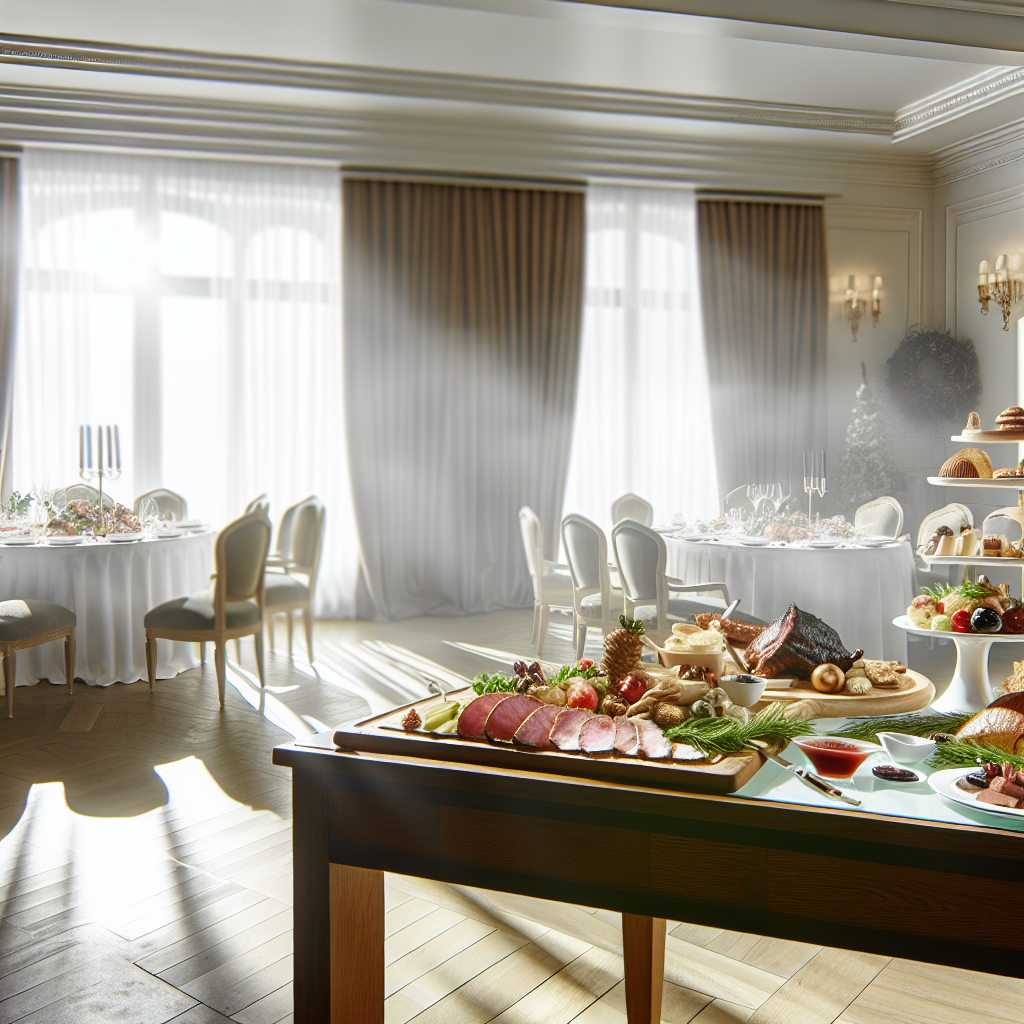
- Why gourmet corporate dinners matter
- Planning the perfect gourmet menu
- Elegant cocktail-style menu
- Seated fine-dining menu
- Sharing-style feast menu
- Dietary requirements without compromise
- Tips to make your dinner unforgettable
Why gourmet corporate dinners matter
A corporate Christmas dinner is more than a nice meal: it’s a rare moment where teams connect, celebrate milestones and strengthen loyalty. A gourmet menu adds a sense of occasion, turning a standard year-end event into something memorable and shareable (on social media and in people’s minds).
Planning the perfect gourmet menu
Define the event style
Before choosing dishes, clarify the format:
- Cocktail reception – standing, dynamic, ideal for networking.
- Seated fine dining – formal, elegant, ideal for speeches and awards.
- Sharing-style / family-style – relaxed, convivial, encourages conversation.
Balance, seasonality and flow
- Use seasonal ingredients such as root vegetables, citrus, chestnuts and game.
- Balance rich dishes with bright, fresh elements.
- Design a clear progression: light bites → warm starters → mains → desserts.
Elegant cocktail-style menu
Canapés and small bites
- Smoked salmon blinis with lemon crème fraîche and dill.
- Mini beef wellington bites with truffle jus.
- Roasted pumpkin arancini with aged Parmesan and sage (vegetarian).
- Seared scallops on cauliflower purée with crispy pancetta.
- Beetroot tartare spoons with goat’s cheese and walnut crumble.
Gourmet food stations
- Artisan cheese & charcuterie station with chutneys, nuts and breads.
- Live carving station with herb-crusted turkey or prime rib and gourmet condiments.
- Seafood bar with oysters, prawns, crab and champagne mignonette.
Mini desserts
- Mini Christmas puddings with brandy anglaise.
- Dark chocolate and salted caramel tartlets.
- Citrus posset shots with shortbread crumble.
Seated fine-dining menu
Sample three-course gourmet menu
Starter
- Gin-cured salmon, pickled cucumber, horseradish cream and rye crumble.
- Roasted parsnip and apple velouté with toasted hazelnuts and chive oil (vegan option).
Main course
- Slow-roasted turkey ballotine with chestnut stuffing, pomme purée, heritage carrots and cranberry jus.
- Pan-seared sea bass, fennel and orange salad, saffron beurre blanc.
- Wild mushroom and truffle pithivier with celeriac purée (vegetarian).
Dessert
- Spiced pear tart tatin with vanilla bean ice cream.
- Grand Marnier dark chocolate mousse with candied orange.
- Vegan coconut panna cotta with roasted pineapple and lime.
Sharing-style feast menu
For teams that prefer a more relaxed and collaborative atmosphere, a sharing feast works brilliantly.
- Whole roasted porchetta with rosemary, garlic and citrus.
- Honey-glazed ham with mustard and clove.
- Platters of roasted root vegetables with thyme and sea salt.
- Truffled mashed potatoes and maple-glazed Brussels sprouts with almonds.
- Big bowls of winter salads: kale, pomegranate, toasted seeds and feta.
Serve dessert as large centrepiece cakes or sharing pavlovas loaded with berries and spiced compotes.
Dietary requirements without compromise
- Offer at least one fully plant-based starter, main and dessert.
- Clearly label gluten-free, nut-free and dairy-free options.
- Design dishes that are naturally inclusive rather than “afterthought” alternatives.
Tips to make your dinner unforgettable
- Pair each course with thoughtful wines or festive mocktails.
- Align the menu names with your brand or theme for extra personality.
- Use lighting, music and table décor to echo the gourmet mood.
- Consider hiring a Private chef in Mallorca or your local area for a bespoke, restaurant-quality experience brought to your venue.
Well-planned gourmet menus transform corporate Christmas dinners into experiences people talk about long after the decorations come down. Focus on quality ingredients, balance and a format that fits your team, and your event will feel truly special.


