
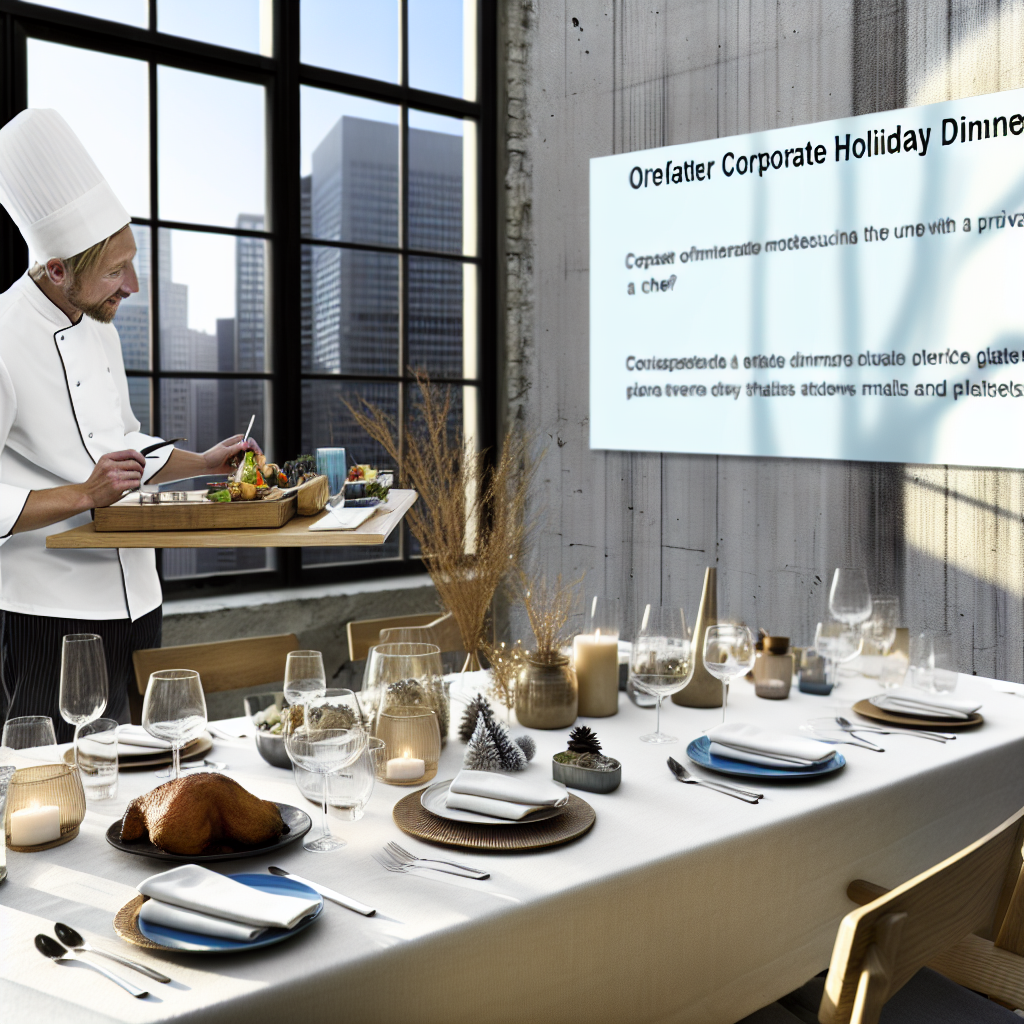
Planning a corporate holiday dinner can be stressful, but working with a private chef turns it into a tailored, memorable experience that actually reflects your company culture. With the right strategy, you can create an event that feels polished, personal, and on-brand—without burning out your internal team.
- Define your goals and event style
- Set a realistic budget
- Choose the right private chef
- Plan a menu that works for everyone
- Sort out logistics and venue details
- Design the guest experience
- Create a planning timeline and checklist
- Manage the day-of flow
- Follow up and measure success
Define your goals and event style
Before you book a private chef or venue, get clear on what this corporate holiday dinner should achieve. This drives every decision—from menu to entertainment.
Clarify the main objectives
Common goals include:
- Team appreciation: Reward employees for a challenging year.
- Client relationship-building: Deepen connections in a relaxed setting.
- Brand positioning: Showcase your company’s values and culture.
- Networking: Connect departments, partners, or global teams.
Decide which two or three are most important so you can prioritize budget and time accordingly.
Choose the event vibe
The style of the dinner should match both your brand and your guests:
- Formal seated dinner: Multi-course, plated service for a polished experience.
- Upscale family-style: Shared platters, conversation-focused, less stiff.
- Cocktail-style reception: Canapés and food stations for mingling.
- Themed experience: For example, “Winter in the Alps” or “Mediterranean Holiday.”
Share this with your private chef early so they can design an appropriate menu and service flow.
Set a realistic budget
A clear budget allows you and your chef to make smart trade-offs without endless revisions.
Key cost categories
- Food and ingredients: Usually the largest portion of the budget.
- Chef and staff fees: Private chef, sous-chefs, servers, bartenders.
- Venue: Rental fee if not using an office or private home.
- Rentals: Tables, chairs, linens, glassware, flatware, décor.
- Beverages: Alcoholic and non-alcoholic drinks; corkage fees if applicable.
- Entertainment: Music, live performers, speakers, photo booth.
- Logistics: Transportation, parking, security, permits.
Per-person budget ranges
Private chef corporate dinners typically fall into per-guest pricing. As a rough guide (which will vary by location and season):
- Mid-range: 60–120 per person (simple, high-quality menus).
- Premium: 120–250 per person (multi-course, elevated ingredients, strong service level).
- Luxury: 250+ per person (top-tier ingredients, extensive staffing, custom décor).
Be transparent with your chef about your target range. Many can design multiple menu tiers to fit your budget.
Choose the right private chef
The chef you hire will shape the entire feel of the evening. Prioritize expertise, reliability, and chemistry with your company culture.
Where to find corporate-friendly private chefs
- Professional private chef agencies or concierge services.
- Recommendations from colleagues and partner companies.
- High-end catering companies that offer private chef experiences.
- Local hospitality networks or business clubs.
If your event is destination-based—say, booking a Private chef in Mallorca for an international retreat—look for chefs who understand both local cuisine and corporate expectations.
What to look for in a private chef
- Corporate event experience: Managing timings, speeches, and structured agendas.
- Menu flexibility: Able to handle dietary restrictions and last-minute changes.
- Professionalism: Clear contracts, insurance, licenses, and references.
- Communication style: Fast responses, clear proposals, proactive suggestions.
Questions to ask before you book
- What is your experience with corporate holiday dinners?
- How do you handle dietary restrictions and allergies?
- What is included in your fee (staff, rentals, clean-up, menu tastings)?
- Can you share sample menus and photos from past events?
- How do you structure timing for a multi-course dinner with speeches or awards?
Plan a menu that works for everyone
A successful corporate holiday dinner menu balances creativity with broad appeal and inclusivity.
Align the menu with your theme and audience
Consider:
- Cuisine style: Classic festive, modern seasonal, fusion, or regional focus.
- Formality: Plated courses vs. buffet vs. interactive stations.
- Timing: How long you want guests seated for each course.
Address dietary needs early
Ask guests for preferences during RSVP:
- Vegetarian, vegan, pescatarian.
- Gluten-free, dairy-free, nut-free.
- Religious or cultural considerations (e.g., halal, kosher-style).
Provide your chef with a consolidated list at least two weeks before the event. They can design base dishes that are easily adapted for different needs.
Balance the courses
For a seated, multi-course corporate dinner, a common structure is:
- Welcome bite or canapé with a drink.
- Light starter (e.g., seasonal salad, seafood, or vegetable dish).
- Main course with at least two options (meat/fish and vegetarian).
- Dessert (indulgent but not overly heavy).
- Optional cheese course or petits fours with coffee and tea.
Ask your chef for suggestions that highlight seasonal, local ingredients to keep the menu fresh and distinctive.
Don’t forget beverages
- Curated wine pairings to match each course.
- Signature cocktails that reference your brand or theme.
- Thoughtful non-alcoholic options like mocktails, infused waters, and specialty sodas.
Sort out logistics and venue details
Even the best menu can fall flat without strong logistical planning. Work with your private chef to assess what’s feasible in the chosen space.
Evaluate the kitchen and equipment
Share details or photos of the venue kitchen, including:
- Oven type and capacity.
- Stovetop burners and counter space.
- Refrigeration and freezer access.
- Available cookware and serving pieces.
If the space is limited, your chef may suggest partial off-site preparation, simplified courses, or mobile kitchen equipment.
Plan the room layout
Collaborate with your chef and venue on:
- Table configuration (rounds vs. long tables, VIP or leadership seating).
- Flow for service staff and guests.
- Space for bar, buffet or stations, stage, and entertainment.
- Accessibility for all guests.
Confirm service staff and timing
Clarify:
- How many servers, bartenders, and chefs will be on-site.
- Arrival and set-up times.
- Service style and pace (leisurely vs. efficient).
- Clean-up responsibilities and timing.
Design the guest experience
A corporate holiday dinner is more than food. It’s an experience that can deepen loyalty and morale if crafted thoughtfully.
Set the atmosphere
- Lighting: Warm and flattering, with candles or soft fixtures.
- Music: Background playlist, live musicians, or a DJ at the end of the evening.
- Decor: Seasonal but aligned with your brand colors and tone.
- Place cards and menus: Branded print or digital menus add a polished touch.
Incorporate meaningful moments
Coordinate with leadership and the chef on:
- Timing for welcome speeches and toasts.
- A short recognition or awards segment.
- Any interactive culinary elements (chef’s table, live carving, or plating demos).
Consider gifts and takeaways
- Branded dessert boxes or chocolates.
- A small bottle of wine or olive oil with a custom label.
- Recipe cards featuring one of the chef’s dishes.
Create a planning timeline and checklist
Working backward from your event date keeps everything on track and reduces last-minute stress.
6–8 weeks before
- Define event goals, guest list size, and budget.
- Choose date, time, and venue.
- Research and contact private chefs; request proposals.
- Confirm the chef and sign contracts.
4–6 weeks before
- Finalize event style (seated, buffet, cocktail).
- Lock in a preliminary menu with the chef.
- Book rentals, décor, and entertainment.
- Send invitations with RSVP and dietary questions.
2–3 weeks before
- Provide final headcount and dietary list to the chef.
- Confirm timeline of the evening (arrival, speeches, courses, wrap-up).
- Review floor plan and seating chart.
- Confirm staffing numbers and arrival times.
1 week before
- Share any last-minute program updates with the chef (awards, presentations).
- Double-check logistics: parking, building access, loading dock details.
- Prepare printed materials: menus, place cards, signage.
Day before and day of
- Reconfirm schedule with venue, chef, and key internal stakeholders.
- Ensure payment methods and contacts are ready for any incidentals.
- Have a point person on-site to answer questions and coordinate.
Manage the day-of flow
A smooth event day requires coordination, but the right plan lets you actually enjoy the dinner alongside your guests.
Assign clear roles
- Internal lead: Main contact for the chef and venue.
- Host or MC: Welcomes guests, introduces speakers, keeps energy up.
- Logistics support: Handles signage, arrivals, and last-minute adjustments.
Stay flexible
Minor timing shifts are normal. Work with the chef to adapt course pacing around speeches or late arrivals. Keep a simple run-of-show document so everyone understands the plan.
Follow up and measure success
Post-event reflection turns a one-time dinner into a foundation for better events in the future.
Gather feedback
- Short digital survey to attendees (overall experience, food, ambiance).
- Informal feedback from leadership and VIP guests.
- Notes from the chef and staff on what worked well operationally.
Measure against your goals
Revisit the objectives you set at the start:
- Did team members feel appreciated and energized?
- Did key clients or partners deepen their connection with your brand?
- Was the experience aligned with your company’s values and image?
Capture and reuse assets
- Photos and video for internal communications or employer branding.
- Testimonials about the chef and experience for future planning.
- A “playbook” document capturing timelines, contacts, and lessons learned.
With thoughtful planning, the right private chef, and clear communication, your corporate holiday dinner can feel effortless, memorable, and genuinely meaningful for everyone who attends.


